
Backpacker's Blueprint
Decoding the World Through Architecture


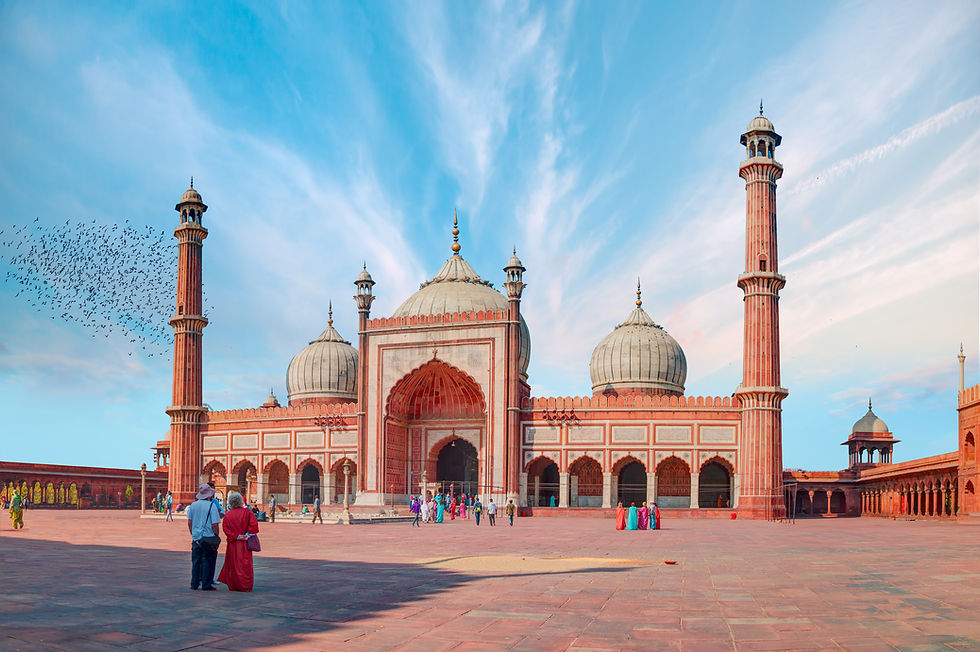
JAMA MASJID
Commanding the skyline of Old Delhi, Jama Masjid is a monumental expression of Mughal power, symmetry and sacred space; a masterpiece in red sandstone and white marble.
The Architecture Of Jama Masjid
Jama Masjid
Old Delhi, India
01
About
Built between 1644 and 1656 by Emperor Shah Jahan; the same visionary behind the Taj Mahal; Jama Masjid stands as India’s largest and most iconic mosque. Known officially as Masjid-i-Jahān-Numā, meaning “World-reflecting Mosque”, it’s capable of holding over 25,000 worshippers in its vast courtyard.
This is not just a mosquel; it’s a symbol of Mughal imperial architecture at its peak. Located in the heart of chaotic Old Delhi, Jama Masjid offers a striking contrast: spiritual calm amid the bustling madness of Chandni Chowk. It remains a fully functional mosque and a powerful cultural touchstone.
03
Architecture Highlights
Material Palette: Constructed with red sandstone and pure white marble; typical of Shah Jahan’s reign.
Grand Entrance Gates: Three massive gateways lead to the central courtyard; the eastern gate was used by the emperor himself.
Prayer Hall & Domes: The main prayer hall is flanked by three white domes, all inlaid with black stripes; a refined Mughal design element.
Minarets: Two 40-metre tall minarets provide panoramic views of Old Delhi; climb to the top for a dramatic skyline shot.
Intricate Calligraphy & Inlays: The inner walls are adorned with Quranic inscriptions and floral motifs in marble; elegant, not excessive.
It’s symmetrical, it’s spatially controlled, and it’s all about axial geometry and scale; the very essence of Mughal architectural discipline.
02
How to get there
Located in Old Delhi, near Chandni Chowk and Red Fort.
Metro: Take the Violet Line to Jama Masjid Station, or use Chandni Chowk Station (Yellow Line); about a 10-minute walk through the market streets (see the video as I got off in Chandni Chowk to explore Jama Masjid.
Rickshaws: Auto or cycle-rickshaws are a great way to navigate the narrow lanes nearby (can be slower as the streets can turn to gridlock).
By Foot: If you're exploring Old Delhi, this is a key stop along the Mughal trail.
Dress modestly; you’ll be asked to cover your arms and legs. Robes are available at the entrance. A small photography fee may also apply.
04
Where to Stay
76 Friend Colony; A modern property in the suberbs of New Delhi. Quiet, minimal and elegant.
The Imperial; The Imperial is a British colonial-era masterpiece, their Bikaner House wing has some of the finest Art Deco interiors in the city.
Haveli Dharampura; Nestled in Old Delhi, this restored 19th-century haveli blends Mughal and Rajput styles. A stay here feels like stepping back in time.


