Backpacker's Blueprint
Decoding the World Through Architecture


KAILASA TEMPLE
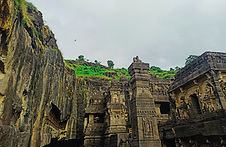
Commanding the basalt cliffs of Maharashtra, Cave 16 is an unprecedented 200,000-ton monolith carved from the top down—an architectural feat of pure subtractive engineering.
Kailasa Temple: An Architect Audits India's Impossible Mountain Temple
Kailasa Temple (Ellora Cave 16)
Ellora Caves, Maharashtra, India
01
About
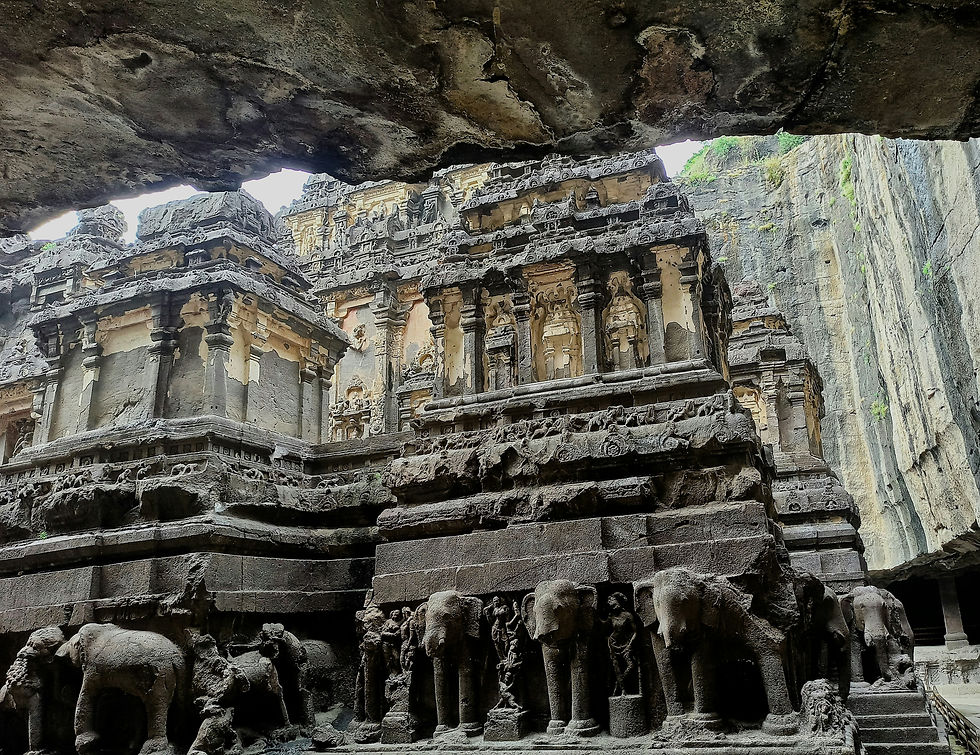
Carved from a single volcanic basalt cliff, Kailasa Temple (Cave 16) at Ellora represents the pinnacle of ancient Indian rock-cut architecture. Commissioned by King Krishna I of the Rashtrakuta Dynasty in the 8th century CE, the structure was executed using top-down subtractive excavation—meaning ancient masons began at the summit of the mountain and carved downward, leaving zero margin for structural error. Over 200,000 tonnes of solid rock were excavated to isolate the central monolith. The complex features a 15-meter vertical victory obelisk, freestanding life-sized elephant plinths, monolithic connecting bridges, and deep Dravidian structural proportions that challenge modern engineering assumptions.
03
Architecture Highlights
Top-Down Subtractive Engineering: Carved directly out of the mountain cliff face from top to bottom.
200,000-Ton Basalt Excavation: Structural isolation requiring the removal of massive basalt rock volume.
Ethereal Elephant Plinth: An 8-meter decorated podium supported symbolically by carved stone elephants.
Acoustic Resonant Chambers: Vaulted ceiling geometry engineered to modulate mantric vocal frequencies.
02
How to get there
04
Where to Stay
Located 30 km northwest of Chhatrapati Sambhajinagar (Aurangabad), Maharashtra. Access the site via direct local bus or private taxi to Ellora Caves. The complex is accessible by domestic flights into Aurangabad Airport (IXU) or direct rail connections.